Service 01
Petroleum Cold Cracking & Crude Upgrading
Refineries processing heavy or high sulphur crude face a persistent challenge: low distillate yields, high viscosity residues, energy-intensive processing, and mounting volumes of oil-contaminated sludge classified as hazardous waste. Conventional upgrading routes — thermal cracking, chemical additives, blending with diluents — are costly, carbon-intensive, and generate secondary waste streams. Meanwhile, sludge in storage ponds represents both a regulatory liability and a recoverable asset being written off.
With a focus on innovation, we ensure that our strategies are data-driven and effective, helping businesses thrive in the digital landscape.
Who Needs This
Refineries
Crude distillation and vacuum distillation units processing heavy crude slates or high-sulphur feedstocks requiring improved yield economics
Environmental Remediation
Facilities with accumulated oil sludge in storage ponds facing Schedule I hazardous waste disposal obligations under CPCB rules
Technology & Process
Petroleum Cold Cracking Technology uses resonant frequency-based low-temperature upgrading — deployed exclusively in India by Geovitas — to restructure hydrocarbon molecules at the molecular level, without high heat or chemical additives. The result: better crude, more distillates, less residue, and recovered hydrocarbons from waste.
01
Feedstock & Opportunity Assessment
Review crude slate, VR stream, or sludge to quantify upgrading potential and identify the right PUU configuration
02
Integration & Feasibility Design
Design PUU for integration point — CDU pre-treatment, VDU bottoms, or sludge storage — and model economic impact
03
Deployment & Validation
Deploy PUU at facility with results independently validated against agreed KPIs before scale-up commitment
04
Full-Scale EPC & Commissioning
Successful trial triggers full EPC execution — Geovitas manages procurement, installation, commissioning, and operational handover
What we Deliver
Performance Validation Report
Independent verification of upgrading results, yield improvements, and emission reduction profile against baseline
Full EPC and Commissioning Plan
Detailed engineering, procurement schedule, installation sequence, and handover protocol
O&M Framework and Operating Procedures
Operational manuals, maintenance schedules, and performance monitoring protocols
The Client Outcomes
-
Improved product yields from the same crude — more distillates, less residue, higher value per barrel
-
Lower energy consumption compared to thermal cracking routes
-
Reduced diluent and additive costs through lower-temperature processing
-
Hazardous sludge converted from regulatory liability to recovered product
-
Verified emissions reduction profile supporting carbon credit generation under India CCTS
Better economics, lower energy costs, recovered waste value, and carbon credit eligibility - all from the same crude slate.
Why it calls for Urgent Action
The Regulatory Relevance and Criticality
Our Petroleum Cold Cracking & Crude Upgrading Services addresses regulatory requirements across hazardous waste management, export market access, and carbon credit generation
CPCB / SPCB (India)
Oil sludge classified as hazardous waste under Schedule I of Hazardous Waste Management Rules. PUU-based treatment meets regulatory standards for hydrocarbon recovery and residue disposal – eliminating landfill liability.
EU CBAM
Indian refiners exporting petroleum products to Europe can demonstrate lower embedded emissions through energy-efficient upgrading, directly reducing CBAM certificate costs.
India CCTS & ESG
Verified CO₂ reductions from replacing energy-intensive treatment with low-temperature PUU processing are eligible for carbon credit generation under India’s Carbon Credit Trading Scheme.
Improve distillate yields, reduce energy costs, and eliminate sludge liability. Schedule a technical and economic feasibility study.
Our Energy Transition Services
1
Petroleum Cold Cracking & Crude Upgrading
Resonant frequency-based upgrading: better distillate yields, lower energy consumption, hazardous sludge converted to recovered product.

2
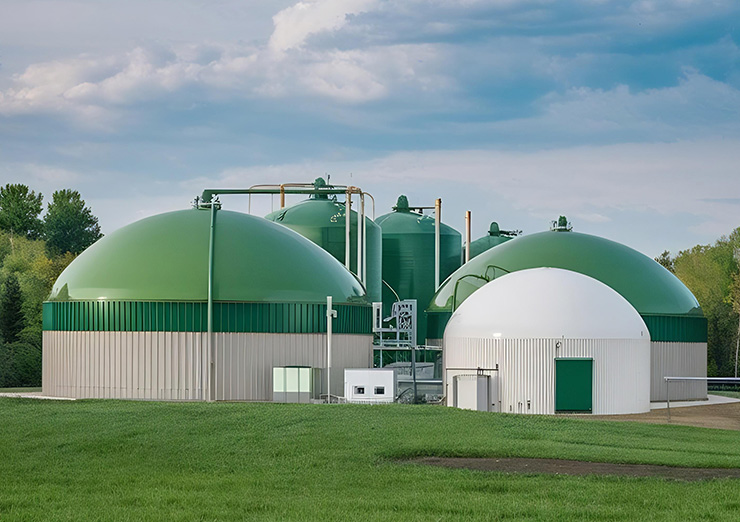
Compressed Biogas (CBG) Project Development
Waste-to-fuel infrastructure: anaerobic digestion plants with guaranteed OMC off-take under SATAT scheme empanelment.
3
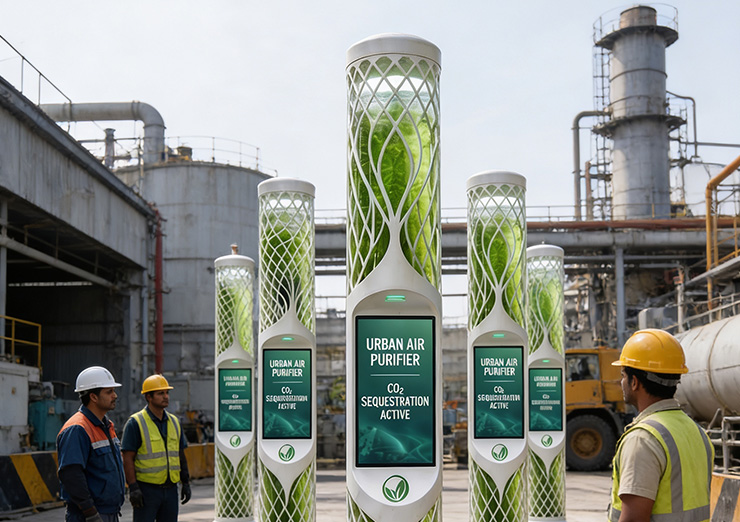
Microalgae Carbon Capture & Utilisation
Biological CO₂ capture from industrial flue gas: photobioreactors producing saleable biomass with verified Scope 1 reductions.
Three Service Lines
We work with cities, industries, and energy operators - each with a distinct pathway
Every organisation is now a climate organisation. This includes both the government and private ones. By this we mean every city, region, industry and energy company. Geovitas is how the serious organisations get ahead and stay ahead.
Cities & Urban Local Bodies
Urban Resilience Platforms
India's cities must meet climate targets set by frameworks they had no hand in designing - with data infrastructure that does not yet exist. A city without a verified emissions baseline cannot access climate finance, cannot defend a SAPCC submission, and cannot generate carbon credits.
We build that baseline - and the monitoring infrastructure that keeps it current, compliant, and credit-generating.
Manufacturing & Export
Green Factory 360
CBAM, BRSR Core, and buyer-driven Scope 3 requirements are converging on Indian industry simultaneously. The financial exposure is quantifiable. For a mid-sized steel exporter, CBAM alone can exceed ₹50 crore annually - and most manufacturers have not run that number yet.
We calculate your regulatory exposure across CBAM, BRSR, and CCTS - then build the verified data and reduction roadmap that brings it down.
Our Story
The name Geovitas comes from geo (earth) and vitas (life) – sustaining life by making climate action economically rewarding. We serve three sectors: cities converting emission reductions into carbon credit revenue, manufacturers accessing export contracts through verified product carbon footprints, and energy operators stacking revenue from waste recovery and verified reductions. Climate accountability becomes commercially viable when the same data that meets regulatory requirements also unlocks green finance, reduces certificate costs, and generates tradeable credits.
Our Goals
0+
Cities and industrial clients by 2028
0M
Metric tonnes of CO₂e reduction by 2028
0
Sectors. One Platform
Our Partners
force multiply our impact
Geovitas collaborates with research institutions, international climate organizations, and India's first carbon credit registry to deliver verification standards and market access that meet both domestic and international requirements.