Cities & Urban Local Bodies
Most cities in India has a climate plan. Very few have the data to make right decisions
That gap is why climate finance applications fail, climate budgets go undefended, and every vendor in the room knows more about the city’s emissions than the city does.
Geovitas closes this vital gap.


The reality most cities face
A city cannot fund what it cannot measure.
India's cities are expected to lead the country's Net Zero transition. National missions say so. Multilateral climate finance bodies say so too — but only to cities that can show them verified emissions data built from actual records: RTO data, distribution company figures, pollution control board readings. Most Indian cities cannot. Without that baseline, climate finance applications do not pass first review, and the carbon revenue that should be self-funding the city's climate programme stays unclaimed.

What the absence of data costs a city
Climate finance applications stall
Green Climate Fund, World Bank, ADB – all require verified MRV-compliant emissions data. Without it, applications do not pass first review.
Climate budget goes undefended
Every rupee a city allocates to climate action needs to show impact — to state government, to funders, to citizens. Without a verified baseline, there is no way to prove whether the spending worked. The budget gets questioned every cycle.
Carbon revenue goes unclaimed
EV fleet transitions, green cover expansion, waste management upgrades – all generate carbon credits. But only if the reductions are verified. Most cities have made these improvements and earned nothing from them.
Climate commitments remain unverifiable
A city that cannot show current emissions data cannot demonstrate progress. Its climate programme exists on paper — not in practice.
What we deliver
The Geovitas Climate Intelligence Framework
Four capabilities. One integrated programme.
Each capability feeds the next. The GHG baseline enables the monitoring platform. The monitoring platform enables the decarbonisation strategy. The strategy enables the carbon credits. Together they form a city climate programme that runs continuously – not a report that gets filed.
01
Comprehensive Carbon Footprint Inventory
- Complete GHG inventory aligned with IPCC and GHG Protocol standards
- Covers Scope 1, 2, and 3 emissions across all municipal operations
- Sector-wise breakdown: electricity, transport, waste, industry, water, land use
- Establishes a compliance-ready baseline for policy planning and budget allocation
- Provides defensible data for regulatory reporting and climate commitments


02
Integrating Sectoral Emissions in the GCIT Platform
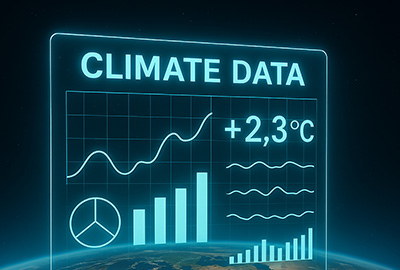
- Continuously updating SaaS dashboard - your city's climate intelligence hub
- Integrates real-time data from multiple municipal departments automatically
- Replaces static annual reports with live emissions tracking
- Enables data-backed decisions on climate budgets and project priorities
- Transforms climate data from annual exercise to active management tool

03
Implementation-Ready Sustainability Initiatives
- Algae-based CO₂ capture systems for localized emissions reduction
- Waste-to-energy (CBG) plants converting municipal solid waste to compressed biogas
- Clean-air interventions targeting vehicular and industrial pollution hotspots
- Decentralized wastewater treatment solutions reducing costs and energy use
- Each project includes ROI projections and municipal-scale feasibility assessments


04
Carbon Credits for Projects
- Register completed sustainability projects for carbon credits
- Access national and international carbon markets for verified emission reductions
- Full support with documentation, verification, and registration processes
- Transform climate action from cost center to revenue stream
- Monetize your municipality's net-zero commitments

How we work
The sequence matters as much as the output.
-
1
Stakeholder mapping and data scoping
Inventory boundary defined. Primary data sources identified across city departments. Output standard set against regulatory and finance requirements. -
2
Primary data collection and validation
RTO records, DISCOMs, oil marketing companies, pollution control boards. No secondary estimates where primary data exists. Every figure cross-validated. -
3
City-level GHG baseline
Scope 1, 2, 3 inventory to GHG Protocol standards. Transport, electricity, LPG, waste, green cover — sector by sector. Every assumption documented and traceable. -
4
City level carbon intelligence tool
Live monitoring dashboard. Emissions tracked continuously. Flags drift. Simulates interventions. Generates audit-ready MRV reports for SAPCC submissions and credit verification. -
5
Decarbonisation roadmap and business case
Sector-specific action pathways, quantified impact targets, implementation costs, and green finance structuring — built for the city’s infrastructure and budget, not a generic template. -
6
Carbon credit origination and ongoing monitoring
Verified reductions listed through RenewCred. Revenue structured as a recurring income stream. Monitoring continues — the system does not stop at handover.

What a city has at the end
A running programme.
The difference between a city that has filed a climate plan and a city that is running a climate programme is the data infrastructure underneath it. Here is what that looks like in practice.
Carbon Inventory
Live Digital MRV
Carbon Revenue
Looking to put your City ahead
Three Service Lines
We work with cities, industries, and energy operators - each with a distinct pathway
Every organisation is now a climate organisation. This includes both the government and private ones. By this we mean every city, region, industry and energy company. Geovitas is how the serious organisations get ahead and stay ahead.
Manufacturing & Export
Green Factory 360
CBAM, BRSR Core, and buyer-driven Scope 3 requirements are converging on Indian industry simultaneously. The financial exposure is quantifiable. For a mid-sized steel exporter, CBAM alone can exceed ₹50 crore annually - and most manufacturers have not run that number yet.
We calculate your regulatory exposure across CBAM, BRSR, and CCTS - then build the verified data and reduction roadmap that brings it down.
Oil, Gas & Energy
Energy Transition Infra
A refinery's capital committee does not approve a technology because it has a good carbon story. It approves it because it fits the hurdle rate. The three technologies Geovitas deploys generate a return on a timeline the energy sector actually uses - and CCTS credits as a second output.
We transform existing energy assets with cold cracking, compressed biogas, and microalgae technologies that lower emissions, create carbon revenue opportunities, and improve project economics.
Our Story
The name Geovitas comes from geo (earth) and vitas (life) – sustaining life by making climate action economically rewarding. We serve three sectors: cities converting emission reductions into carbon credit revenue, manufacturers accessing export contracts through verified product carbon footprints, and energy operators stacking revenue from waste recovery and verified reductions. Climate accountability becomes commercially viable when the same data that meets regulatory requirements also unlocks green finance, reduces certificate costs, and generates tradeable credits.
Our Goals
0+
Cities and industrial clients by 2028
0M
Metric tonnes of CO₂e reduction by 2028
0
Sectors. One Platform
Our Partners
force multiply our impact
Geovitas collaborates with research institutions, international climate organizations, and India's first carbon credit registry to deliver verification standards and market access that meet both domestic and international requirements.