Energy Transition | Service 03
Microalgae-Based Carbon Capture & Utilisation
Hard-to-abate industries — cement, steel, chemicals, power generation — cannot fully electrify or switch fuels in the short term. They face mounting pressure from net-zero targets, voluntary carbon markets, and mandatory regulations, yet most carbon capture solutions are either prohibitively capital-intensive (CCUS) or land-hungry (afforestation). Geovitas and partnered technologist’s microalgae-based carbon capture system offers a biological, modular alternative: photobioreactors deployed at industrial emission points that capture CO₂ directly from flue gases and Direct Air Capture (DAC), converting it into bio-materials (feed, fertiliser, pigments, biofuels) with a low land footprint, minimal infrastructure requirements, and a built-in revenue stream from algal biomass.
2.5+
2.5 – 100,000+
Scope 1
Direct emission reductions
0%
India's NDC target
Who benefits from this
City Gas and Urban Infra Operators
This helps cities, transport hubs, and commercial infrastructure meet sustainability and net-zero goals without major land or infrastructure requirements.
.
Cement, Steel, Power
Hard-to-abate industries with point-source CO₂ emissions seeking verifiable Scope 1 reductions for net-zero pathways
Petrochem & Refinery
Complexes under net-zero commitments requiring on-site carbon capture without major infrastructure overhaul
Pharma & Chemical
Manufacturers seeking carbon neutrality with independently verifiable emission reduction certification
Airports, Campuses, Data Centres,
Large commercial facilities deploying Direct Air Capture (DAC) for Scope 1 and 3 emission reductions
SBTi Corporates
Companies with Science-Based Targets requiring independently verifiable Scope 1 emission reductions
Carbon Credit Developers
VCM project aggregators seeking verified CO₂ removal with co-product revenue streams
.
The Deployment Process
A four-stage deployment process that moves from site assessment to validated performance to full-scale integration
01
Emission Audit & Site Scoping
Flue gas composition analysis; CO₂ concentration, temperature, and flow rate measurement; site footprint assessment; regulatory review
02
System Design & Business Case
Photobioreactor configuration and sizing; integration engineering; CAPEX/OPEX modelling; carbon credit and biomass revenue forecasting
03
Deployment
Modular system installation; algae strain selection and optimisation; performance validation and CO₂ capture rate confirmation
04
Scale-Up & Integration
Full-scale system roll-out; plant operations integration; biomass harvesting and processing infrastructure; off-take partner engagement
What We Deliver
Comprehensive technical documentation that quantifies carbon credit generation, biomass product revenue, and integration requirements — de-risking deployment and financing decisions
Emission Source Characterisation and Flue Gas Analysis
Detailed assessment of CO₂ concentration, temperature, flow rate, and contaminant profile for system design
System Sizing and Modular Deployment Plan
Photobioreactor configuration, capture capacity projections, and phased installation roadmap
CO₂ Capture Rate Projections (tonnes/year)
Site-specific capture volume forecasts with seasonal variability analysis
Biomass Utilisation Study and Off-take Agreements
Revenue analysis for algal biomass products (feed, fertiliser, biofuel, pigments) with buyer engagement
Integration Engineering with Existing Plant Infrastructure
Mechanical, electrical, and process integration design minimising operational disruption
The Client Outcomes
-
Verified annual CO₂ capture volume (tCO₂e) — independently certified for carbon credit issuance
-
Biomass revenue model (feed, fertiliser, biofuel, pigments) offsetting operating costs
-
Net-zero contribution statement for ESG reporting and investor disclosure
-
Scope 1 GHG reduction certification for SBTi validation
-
Lifecycle assessment (LCA) report quantifying net carbon removal
Generate carbon credits while producing saleable bio-materials that offset operating costs
Why it calls for Urgent Action
The Regulatory Relevance and Criticality
Verified carbon capture creates compliance pathways and revenue opportunities across international trade requirements, domestic carbon markets, and corporate climate targets
India CCTS / PAT Scheme
Verified carbon capture is eligible for carbon credit generation under India’s Carbon Credit Trading Scheme. Facilities under the Perform, Achieve, Trade (PAT) scheme can use captured CO₂ toward energy efficiency targets.
EU CBAM
Cement, steel, and fertiliser producers exporting to the EU can directly reduce CBAM certificate costs by demonstrating lower embedded emissions through verified on-site CO₂ capture. Each tonne of CO₂ captured and verified reduces the embedded emissions that CBAM declarants must pay for from 2026.
SBTi & Corporate Net-Zero
Installations provide independently verifiable Scope 1 emission reductions for companies with Science-Based Targets or Corporate Net-Zero pledges. The technology aligns with India’s NDC goals to reduce emissions intensity of GDP by 45% by 2030.
Meet your net-zero commitments with verifiable Scope 1 reductions. Book an emission characterization study to determine system configuration, carbon credit generation, and SBTi validation pathway.
Our Energy Transition Services
1
Petroleum Cold Cracking & Crude Upgrading
Resonant frequency-based upgrading: better distillate yields, lower energy consumption, hazardous sludge converted to recovered product.

2
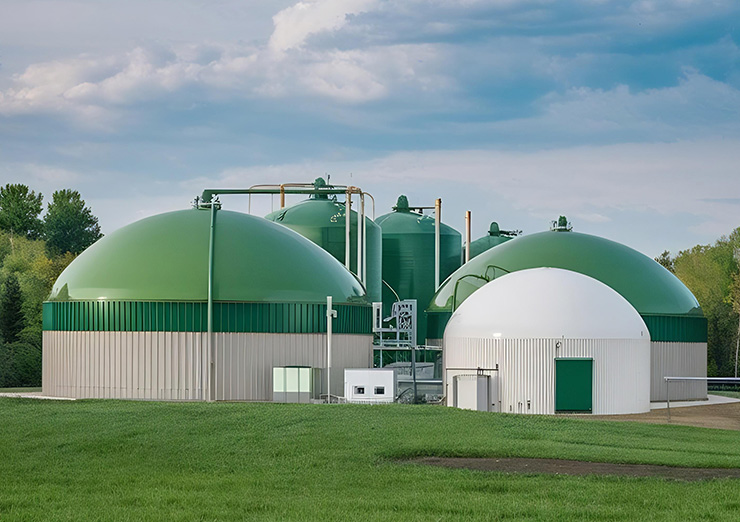
Compressed Biogas (CBG) Project Development
Waste-to-fuel infrastructure: anaerobic digestion plants with guaranteed OMC off-take under SATAT scheme empanelment.
3
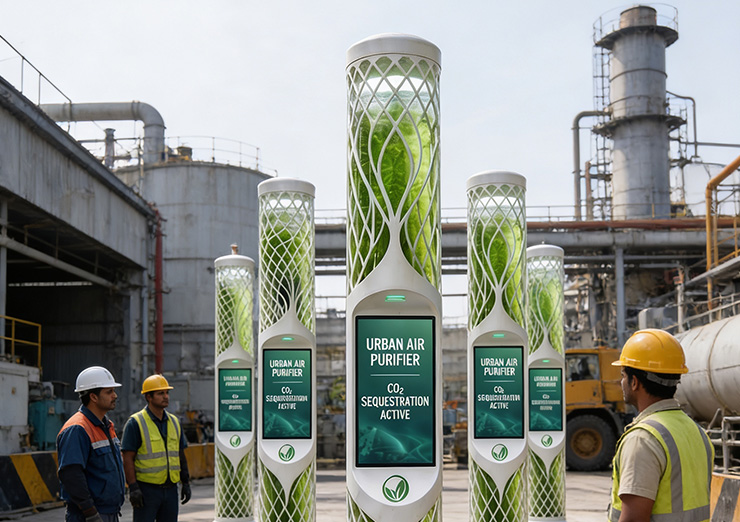
Microalgae Carbon Capture & Utilisation
Biological CO₂ capture from industrial flue gas: photobioreactors producing saleable biomass with verified Scope 1 reductions.
Three Service Lines
We work with cities, industries, and energy operators - each with a distinct pathway
Every organisation is now a climate organisation. This includes both the government and private ones. By this we mean every city, region, industry and energy company. Geovitas is how the serious organisations get ahead and stay ahead.
Cities & Urban Local Bodies
Urban Resilience Platforms
India's cities must meet climate targets set by frameworks they had no hand in designing - with data infrastructure that does not yet exist. A city without a verified emissions baseline cannot access climate finance, cannot defend a SAPCC submission, and cannot generate carbon credits.
We build that baseline - and the monitoring infrastructure that keeps it current, compliant, and credit-generating.
Manufacturing & Export
Green Factory 360
CBAM, BRSR Core, and buyer-driven Scope 3 requirements are converging on Indian industry simultaneously. The financial exposure is quantifiable. For a mid-sized steel exporter, CBAM alone can exceed ₹50 crore annually - and most manufacturers have not run that number yet.
We calculate your regulatory exposure across CBAM, BRSR, and CCTS - then build the verified data and reduction roadmap that brings it down.
Our Story
The name Geovitas comes from geo (earth) and vitas (life) – sustaining life by making climate action economically rewarding. We serve three sectors: cities converting emission reductions into carbon credit revenue, manufacturers accessing export contracts through verified product carbon footprints, and energy operators stacking revenue from waste recovery and verified reductions. Climate accountability becomes commercially viable when the same data that meets regulatory requirements also unlocks green finance, reduces certificate costs, and generates tradeable credits.
Our Goals
0+
Cities and industrial clients by 2028
0M
Metric tonnes of CO₂e reduction by 2028
0
Sectors. One Platform
Our Partners
force multiply our impact
Geovitas collaborates with research institutions, international climate organizations, and India's first carbon credit registry to deliver verification standards and market access that meet both domestic and international requirements.