Service 02
Compressed Biogas (CBG) Project Development
India generates enormous volumes of agricultural residue, municipal solid waste, press mud, and food-processing by-products — most of which either decompose openly (releasing methane, a greenhouse gas 28x more potent than CO₂) or are burned in fields, causing severe air pollution. Meanwhile, India imports nearly 47% of its natural gas needs. Compressed Biogas (CBG) solves both problems simultaneously: it captures waste methane through anaerobic digestion, purifies and compresses it to CNG-equivalent quality, and creates a domestically produced, low-carbon fuel that can replace diesel and CNG across transportation, industrial, and commercial applications.
0%
India's natural gas import dependency
0
SATAT scheme target for CBG plants
0%
CBG blending mandate for gas companies
Who benefits from the state of the things
Agro-Industrial Companies
Sugar mills, distilleries, rice mills with captive organic waste seeking on-site fuel generation and waste disposal cost reduction
.
Urban Local Bodies
Municipalities managing solid waste under Swachh Bharat Mission mandates requiring processing infrastructure
Project Developers
Entrepreneurs targeting SATAT scheme empanelment with bankable project documentation and OMC off-take agreements
Oil Marketing Companies
OMCs procuring CBG under mandated blending requirements with verified feedstock supply chains
Climate Finance Investors
Private equity and DFIs seeking bankable bio-energy assets with revenue stacking (CBG sales + FOM + carbon credits)
Industrial Clusters
Manufacturing zones seeking off-grid renewable fuel for captive thermal and transport applications
Development Process
-
1
Technical & Financial Design
Plant design (digester type, purification, compression); CAPEX/OPEX modelling; revenue stacking (CBG sales, FOM, carbon credits, REC) -
2
Permitting & Regulatory
SATAT/GOBARdhan empanelment; EIA preparation; statutory approvals roadmap -
3
EPC Procurement & Construction
Vendor selection; contract structuring; construction oversight; quality assurance; civil, mechanical, and electrical integration

What we Deliver
Plant Sizing and Technology Selection Report
Feedstock assessment, biogas yield projections, technology comparison, and optimal plant configuration
Financial Model: IRR, NPV, Payback Period
Revenue stacking analysis (CBG sales + fermented organic manure + carbon credits), sensitivity analysis, and investor-ready proforma
SATAT/GOBARdhan Application Support
Complete empanelment documentation, off-take agreement negotiation framework with OMCs
O&M Framework and Revenue Model
Operations manual, maintenance protocol, and multi-revenue stream management (CBG + FOM + carbon credits)
The Client Outcomes
-
Bankable Detailed Project Report (DPR) with investor-grade financial modelling
-
EPC vendor shortlist and contract structure ready for execution
-
Full commissioning punch-list and testing protocol ensuring performance guarantees
-
Carbon credit project registration support under India CCTS
-
Verified emissions reduction profile supporting carbon credit generation under India CCTS
Geovitas provides the full development pathway that takes CBG projects from feasibility to first revenue.
Why it calls for Urgent Action
The Regulatory Relevance and Criticality
CBG development is supported by guaranteed government off-take, export market access advantages, and carbon credit eligibility – three regulatory frameworks that convert waste processing into bankable revenue generation
India - SATAT & GOBARdhan
Government of India’s SATAT scheme targets 5,000 CBG plants and 15 MMT annual production, with guaranteed off-take by Oil Marketing Companies. The 5% CBG blending mandate for gas companies creates a structural demand floor.
EU CBAM
CBG-derived fertilisers and process chemicals exported to the EU benefit from verifiably lower embedded emissions -reducing CBAM certificate obligations.
India CCTS & ESG
Verified GHG reductions from CBG plants are eligible for carbon credit issuance under India’s evolving domestic carbon market.
Quantify your CBG project potential. Book a waste feedstock assessment and financial modelling consultation.
Our Energy Transition Services
1
Petroleum Cold Cracking & Crude Upgrading
Resonant frequency-based upgrading: better distillate yields, lower energy consumption, hazardous sludge converted to recovered product.

2
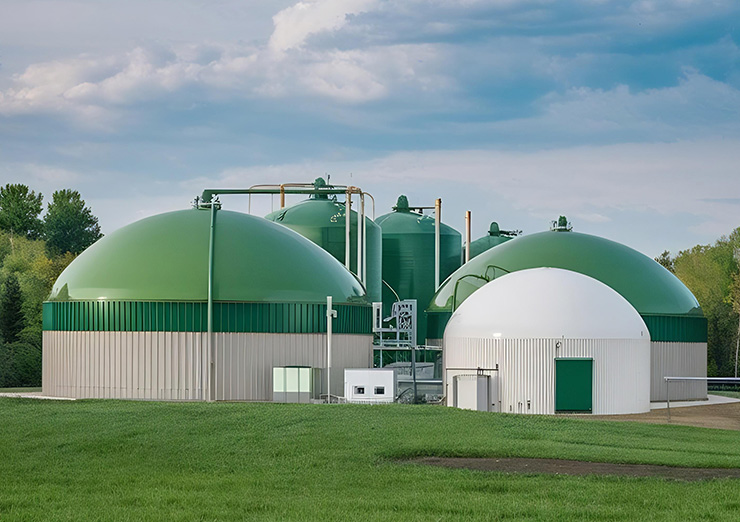
Compressed Biogas (CBG) Project Development
Waste-to-fuel infrastructure: anaerobic digestion plants with guaranteed OMC off-take under SATAT scheme empanelment.
3
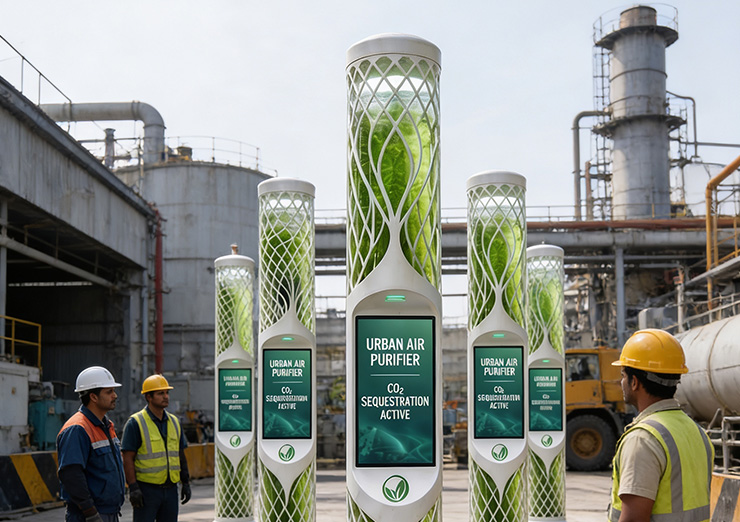
Microalgae Carbon Capture & Utilisation
Biological CO₂ capture from industrial flue gas: photobioreactors producing saleable biomass with verified Scope 1 reductions.
Three Service Lines
We work with cities, industries, and energy operators - each with a distinct pathway
Every organisation is now a climate organisation. This includes both the government and private ones. By this we mean every city, region, industry and energy company. Geovitas is how the serious organisations get ahead and stay ahead.
Cities & Urban Local Bodies
Urban Resilience Platforms
India's cities must meet climate targets set by frameworks they had no hand in designing - with data infrastructure that does not yet exist. A city without a verified emissions baseline cannot access climate finance, cannot defend a SAPCC submission, and cannot generate carbon credits.
We build that baseline - and the monitoring infrastructure that keeps it current, compliant, and credit-generating.
Manufacturing & Export
Green Factory 360
CBAM, BRSR Core, and buyer-driven Scope 3 requirements are converging on Indian industry simultaneously. The financial exposure is quantifiable. For a mid-sized steel exporter, CBAM alone can exceed ₹50 crore annually - and most manufacturers have not run that number yet.
We calculate your regulatory exposure across CBAM, BRSR, and CCTS - then build the verified data and reduction roadmap that brings it down.
Our Story
The name Geovitas comes from geo (earth) and vitas (life) – sustaining life by making climate action economically rewarding. We serve three sectors: cities converting emission reductions into carbon credit revenue, manufacturers accessing export contracts through verified product carbon footprints, and energy operators stacking revenue from waste recovery and verified reductions. Climate accountability becomes commercially viable when the same data that meets regulatory requirements also unlocks green finance, reduces certificate costs, and generates tradeable credits.
Our Goals
0+
Cities and industrial clients by 2028
0M
Metric tonnes of CO₂e reduction by 2028
0
Sectors. One Platform
Our Partners
force multiply our impact
Geovitas collaborates with research institutions, international climate organizations, and India's first carbon credit registry to deliver verification standards and market access that meet both domestic and international requirements.